Starting a baking business is exciting, but the money side can feel far less glamorous than sketching your first logo or planning your first box of cupcakes. So, which early baking business costs should you pay first when money is tight? Most new bakers do not have an unlimited setup budget. They have a list of ideas, a handful of tools, and a growing sense that everything feels urgent.
The truth is, not every early cost deserves your money at the same time.
If you are funding your first baking business yourself, the smartest move is not to buy everything quickly. It is to pay for the things that protect your business, help you sell confidently, and make consistent orders possible. Everything else can come later.
Pay first for the costs that make you legitimate
Before you think about branded tissue paper or a better camera, address the costs that enable you to trade properly. This part is not especially exciting, but it matters. It protects you, builds customer confidence, and prevents you from building a business on shaky ground.
This first layer of spending may include:
- registration or admin-related costs;
- basic insurance;
- food hygiene essentials;
- ingredients storage as well as cleaning supplies;
- anything required to produce food safely and consistently.
These costs do not always feel like they generate sales, but they create the conditions that let you sell at all.
Put ingredients and core baking supplies near the top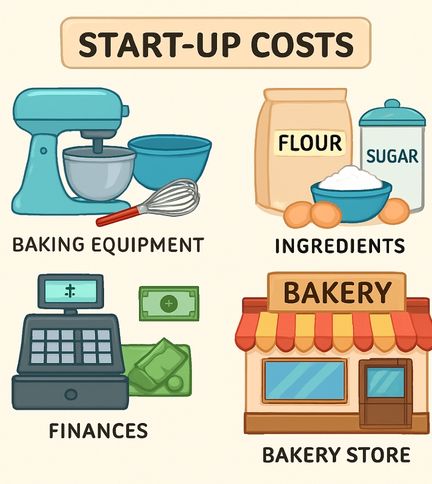
Once your legal and practical basics are covered, the next priority is whatever you need to fulfill real orders well.
That means ingredients, cake boards, boxes, liners, dowels, cake drums, piping bags, and the reliable everyday supplies you reach for again and again. If you run out of these, you do not just lose efficiency; you lose more. You risk delays, substitutions, and unnecessary stress.
New bakers sometimes spend too much on statement tools while underestimating the quiet cost of consumables. Yet repeatable baking depends more on having the right basics on hand than on owning the most impressive equipment.
Discipline matters here. Instead of buying every possible flavouring, mould, and finish straight away, focus on the products tied to the items you actually plan to sell.
Spend early on the tools you truly cannot work without
You do not need a dream studio in month one.
You do need equipment that is dependable enough to help you deliver clean work on time.
For most bakers, that means being honest about what counts as essential. A sturdy mixer may be essential. A second fridge may become essential once order volume grows. A premium airbrush kit may be useful, but not urgent if your early menu does not depend on it.
A simple test is this: does the purchase help you make your signature products safely, consistently, and fast enough to stay profitable?
If the answer is yes, it belongs near the top of the list.
If you are weighing up whether to finance a larger mixer, shelving, or refrigeration, it can help to compare the borrowing cost with the likely return using a simple interest calculator.
Packaging matters earlier than many people expect
Bakers often treat packaging like a finishing touch, but customers judge your business long before they taste the cake.
A plain box is fine if it is sturdy, clean, and appropriate for the product. What matters most early on is protection, presentation, and consistency.
Good packaging helps in three ways. It keeps your bakes safe in transit, makes collection and delivery feel more professional, and supports word of mouth when people share photos. You do not need luxury packaging from day one, but you do need something that reflects care.
For that reason, basic packaging comes ahead of many decorative extras.
Pricing support should come before heavy marketing spend
One of the biggest mistakes new bakers make is spending too early on promotion without first sorting out their numbers.
If you do not know your ingredient costs, overheads, and time, more exposure can simply bring more underpriced orders.
That is why a small investment in pricing clarity often pays off faster than paid adverts. Read more about how much you should charge for your cakes in our dedicated guide.
The same goes for planning. You do not need a huge formal document, but you do need a realistic picture of what you are selling, who you want to serve, and what your first few months should look like. Our article on writing the perfect bakery business plan can help you think that through.
What can wait a little longer?
Some costs feel urgent because they are fun, visible, or emotionally satisfying.
Often, these can wait:
- luxury branding extras;
- expensive content shoots;
- specialist tools for products you do not yet sell often;
- bulk stock buys based on hope rather than confirmed demand;
- premium versions of equipment that a solid mid-range option can handle for now.
There is nothing wrong with wanting beautiful tools and polished branding. The point is timing.
A first-year baking business grows more steadily when each purchase answers a real need, not just a dream version of the business.
Think in stages, not one giant launch
You do not need to fund your whole baking business in one dramatic push.
In reality, many successful bakers build in layers. They start with the essentials, let orders reveal the pressure points, and upgrade only when a purchase saves time, reduces stress, or unlocks better work. Before committing to those major upgrades, running your projected numbers through an internal rate of return calculator can help you determine if the long-term investment will actually pay off.
That approach may feel slower, but it is often far more sustainable.
When money is tight, the right order is everything: pay first for legitimacy, safety, ingredients, core tools, and practical packaging. Then strengthen pricing, planning, and customer experience. The rest can follow as your business starts paying for its own growth.
That may not be the most glamorous way to begin, but it is one of the smartest.