There is nothing quite like slicing into a beautifully baked, perfectly moist cake. But whether you are managing leftover birthday cake or prepping a showstopper a few days before a big party, you eventually face the ultimate baking dilemma: how to store cake in the fridge.
Throw an unprotected cake into the fridge, and the appliance’s heavy-duty cooling fans will strip away its moisture in a matter of hours, leaving you with a dry, crumbly disappointment. Worse yet, cakes are highly porous sponges for flavor; skip the proper coverage, and your beautiful vanilla sponge might end up tasting like last night’s garlic chicken.
Fortunately, keeping cake fresh isn’t a guessing game. By understanding a few basic rules of food science, you can easily protect your cake’s texture and flavor. Here is your ultimate guide on how to store cake in the fridge without drying it out. You can learn more about cake storage and all the key cake decorating disciplines in the CakeFlix Diploma.
Should You Store Cake in the Fridge?
Before you clear a spot on your refrigerator shelf, it helps to know if your cake even belongs there. In many cases, room temperature is actually better for maintaining a soft crumb.
Cakes That Must Be Refrigerated
As a general rule, if your cake contains perishable ingredients, it belongs in the fridge for food safety reasons. You must refrigerate:
- Cheesecakes and ice cream cakes.
- Cakes frosted with whipped cream, meringue, or cream cheese frosting.
- Cakes featuring custard, pastry cream, or mousse fillings.
- Cakes topped or filled with fresh fruit.
Cakes That Can Stay on the Counter
If your cake is unfrosted, or if it is decorated with standard sugar-and-butter buttercream or fondant, it can safely sit at room temperature in an airtight container for 3 to 5 days. In fact, keeping these cakes at room temp preserves their soft texture much better than the fridge.
Rule of Thumb: If the frosting or filling contains dairy that hasn’t been stabilized by a massive amount of sugar (like whipped cream or custard), or if it contains fresh fruit, refrigerate it immediately.
How to Store Cake in the Fridge Properly
If your cake does need to go into the fridge, following a strategic process ensures it stays as moist as the day it was baked.
Step 1: Let the Cake Cool Completely
Never put a warm cake—or even a slightly warm cake—into the refrigerator. The warmth will create condensation inside your container or wrapping. That trapped water will pool on the cake’s surface, making your frosting soggy and creating a breeding ground for mold. Let your layers cool completely on a wire rack first.
Step 2: Protect the Cake Shielding
The air inside a refrigerator is incredibly dry. You need a physical barrier to keep the moisture trapped inside the cake layers. Your best options include:
- A Plastic Cake Carrier: Excellent for frosted cakes because it protects the decorations without touching the icing.
- An Airtight Container: If you have sliced the cake, dynamic airtight storage is your best friend.
- Plastic Wrap: The gold standard for naked or unfrosted layers (wrap them tightly like a package).
Step 3: Store It on the Middle Shelf
Avoid the refrigerator door, where the temperature constantly fluctuates every time you open it. Instead, place your cake on the middle shelf. The temperature here is the most stable, ensuring the cake chills evenly.
Step 4: Keep It Away from Strong-Smelling Foods
Butter and sponge cakes act like grease traps for surrounding scents. Keep your cake far away from unsealed containers of garlic, onions, fish, or pungent leftovers.
How to Store Different Types of Cake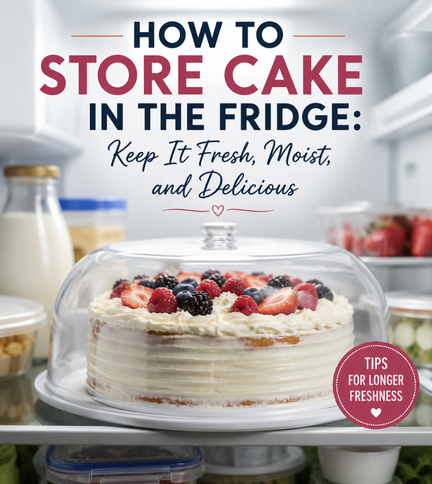
Different structural styles require slightly different protective tactics. Here is how to handle them:
Whole Cakes
If the cake is fully frosted in buttercream, the icing actually acts as a natural barrier to lock in moisture. Place the whole cake into a cake carrier. If you don’t have one, invert a large mixing bowl over the cake on its plate to create a makeshift dome.
Sliced Cakes
The moment you cut into a cake, you expose the delicate interior crumb to the air. To stop it from drying out, press a piece of plastic wrap directly against the cut edges of the cake before putting it back in its container. Alternatively, wrap individual slices tightly in plastic wrap for quick, portion-controlled grab-and-go treats.
Frosted Cakes (The Chill Trick)
If you need to wrap a beautifully decorated frosted cake tightly in plastic wrap but don’t want to ruin the piping, use the “chill trick.” Put the cake into the fridge completely uncovered for 15 to 30 minutes. This hardens the butter in the frosting. Once it is firm to the touch, you can wrap it snugly in plastic wrap without smudging your handiwork.
Naked Cakes
Because naked cakes have exposed sides with little to no outer frosting, they dry out incredibly fast. It is absolutely essential to wrap naked cakes tightly in a double layer of plastic wrap, ensuring no air gaps remain against the sponge.
How Long Does Cake Last in the Fridge?
While the refrigerator extends the life of your baked goods, it isn’t a time machine. Freshness depends entirely on the ingredients. Use this quick-reference table to guide your menu planning:
| Cake Type | Refrigerator Life |
| Butter / Chocolate Cake (Frosted) | 4–5 Days |
| Cheesecake | 5–7 Days |
| Cream-filled / Custard Cake | 3–4 Days |
| Whipped Cream Cake | 2–3 Days |
| Fruit Cake (Traditional/Alcohol-soaked) | Up to 1 Week (or longer) |
How to Keep Cake Moist in the Refrigerator
Beyond the basics, use these insider baking tips to guarantee maximum moisture retention:
- Seal Cut Surfaces Instantly: Never leave the open crumb exposed to the open air. If you don’t have plastic wrap, even spreading a thin layer of extra frosting over the cut surface will seal the moisture in.
- Limit Fridge Openings: Frequent temperature shifts cause moisture to migrate out of the cake. Keep the fridge door closed as much as possible.
- Bring Cake to Room Temperature Before Serving: Cold temperature masks flavor and makes butter-based cakes feel dense and hard. Remove your cake from the fridge 30 to 60 minutes before serving. As the butter melts down to room temperature, the cake will regain its soft, luxurious texture.
Can You Freeze Cake Instead?
If you need to store your cake for longer than a few days, skip the fridge entirely and head straight for the freezer. Freezing preserves the quality of a cake beautifully without drying it out.
Which Cakes Freeze Well?
Most cakes freeze exceptionally well, including dense chocolate cakes, butter cakes, pound cakes, and unfrosted sponge layers. Avoid freezing cakes with delicate meringue, custard fillings, or fresh fruit toppings, as these can become watery and separate when thawed.
How to Freeze Cake Successfully
Wrap your cake or individual slices tightly in a double layer of plastic wrap, followed by a final layer of heavy-duty aluminum foil to prevent freezer burn. Place the wrapped cake into a zip-top freezer bag, squeeze out the excess air, and label it with the date.
Frozen cakes will taste remarkably fresh for 2 to 3 months. When you are ready to enjoy it, thaw the cake overnight inside its wrapping in the refrigerator.
The Commercial Refrigeration Factor: Lessons for Home Bakers
If you have ever ordered a flawlessly moist slice of cake from a bakery display case, you might wonder why their cakes don’t dry out. The secret lies in a commercial-grade refrigerator.
Unlike home units, commercial refrigerators are designed to recover temperatures rapidly after being opened dozens of times a day. To do this, they utilize powerful, high-velocity fans that circulate massive volumes of cold air.
While this is excellent for food safety, high-velocity air is the mortal enemy of a cake. It accelerates evaporation, drying out uncovered baked goods at double the speed of a household fridge.
Because of this, professional bakers and commercial operations never leave cakes exposed. They rely heavily on covered bakery display cases with integrated humidity controls, or they meticulously wrap every single layer in commercial-grade plastic wrap before it hits the walk-in cooler. If you are baking at home or running a cottage bakery business, taking a page out of the commercial handbook—treating the fridge as a high-airflow zone that demands airtight sealing—will instantly elevate your cake-retention game.
Common Cake Storage Mistakes to Avoid
- Refrigerating a warm cake (causes a soggy, mold-prone environment).
- Leaving the cake completely uncovered (quickly turns your cake into a dry brick).
- Using loose foil only (foil doesn’t seal out air or refrigerator odors perfectly on its own; use plastic wrap first).
- Forgetting to protect cut surfaces (destroys the texture of remaining slices).
Frequently Asked Questions
Can I refrigerate cake overnight?
Yes! If your cake is frosted or securely wrapped in plastic wrap, storing it overnight in the fridge is perfectly fine and will not dry it out.
Should I refrigerate a buttercream cake?
Only if your kitchen is incredibly hot and the buttercream is at risk of melting, or if you plan to store it for more than 3 days. Otherwise, standard buttercream keeps beautifully at room temperature.
Can I store a cake in its cardboard bakery box?
Only for an hour or two. Cardboard boxes are not airtight; they will absorb moisture out of your cake and allow refrigerator odors to seep right through.
Conclusion
Keeping a cake fresh and moist in the fridge simply comes down to shielding it from the dry air. By waiting for your layers to cool completely, wrapping exposed surfaces snugly, and giving your cake time to warm back up to room temperature before serving, you can enjoy dessert that tastes perfectly fresh for days. Seal it tight, protect it from strong kitchen odors, and savor every last bite!