Starting your own bakery business is an exciting step, whether you’re planning to sell celebration cakes from home, open a small bakery or eventually move into larger commercial premises. In this post we identify the essential equipment needed to start a bakery business.
However, knowing what equipment you need to start a bakery can feel overwhelming. From ovens and mixers to cake tins, refrigeration and decorating tools, there’s plenty to consider, and the costs can quickly add up.
The good news is that you don’t need to buy everything at once. The right equipment depends on what you’re baking, how many orders you expect and whether you’re working from home or a commercial kitchen.
Here’s our guide to the essential bakery equipment worth investing in, along with some practical tips to help you get started without overspending.
1. Ovens: The Heart of Your Bakery
A reliable oven is one of the most important pieces of equipment for any bakery business.
The type you need will depend on the products you’re making and the number of cakes, pastries or loaves you plan to bake.
Convection ovens
Convection ovens use a fan to circulate hot air, helping distribute heat throughout the oven. They’re popular for cakes, biscuits, pastries and many other baked goods.
Deck ovens
Often used in commercial bakeries, deck ovens are particularly suitable for artisan bread and products that benefit from direct heat from the baking surface.
Rotary rack ovens
These are designed for larger bakery operations where substantial quantities need to be baked consistently.
Our advice: If you’re starting a home cake business, you may not need a commercial oven immediately. A reliable domestic oven could be sufficient while you build your customer base, provided your premises and equipment are suitable for your food business.
2. Mixers: Save Time and Improve Consistency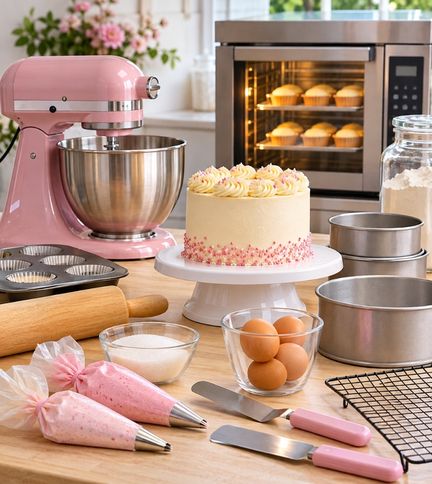
A good mixer can make a significant difference when preparing cake batters, buttercream, dough and fillings.
Planetary mixers
These are particularly useful for cake businesses because they can handle a variety of tasks, including mixing sponge batter, whipping cream and preparing buttercream.
Spiral mixers
Spiral mixers are generally more suitable for bread bakeries producing larger quantities of dough.
Hand mixers
A hand mixer can be a practical and affordable option for smaller batches, particularly when you’re just starting out.
Choose a mixer based on your expected production volume rather than simply buying the largest or most expensive model.
3. Cake Tins, Baking Trays and Pans
Quality baking tins are essential for achieving consistent results.
Your basic equipment might include:
- Round cake tins in several popular sizes
- Square cake tins for celebration cakes
- Cupcake and muffin trays
- Baking sheets for cookies and biscuits
- Loaf tins for traditional cakes and breads
- Cooling racks
For a cake decorating business, start with the sizes you expect customers to order most frequently.
There’s little benefit in buying dozens of specialist tins before you know which products will sell.
4. Cake Decorating Equipment
If you’re planning to specialise in birthday, celebration or wedding cakes, decorating equipment will be just as important as your baking tools.
Some useful essentials include:
- Turntable for covering and decorating cakes
- Palette knives and offset spatulas
- Cake scrapers and smoothers
- Rolling pins for sugarpaste
- Piping bags and nozzles
- Cake boards and suitable support systems
- Modelling tools and cutters
- Digital weighing scales
As your skills develop, you can add specialist equipment for sugar flowers, airbrushing, chocolate work and more elaborate cake designs.
Learning how to use your equipment properly is just as important as owning it.
Our Cake Decorating Diploma teaches essential baking and decorating techniques, including buttercream, ganache, sugarpaste and professional cake finishing.
5. Refrigeration and Freezer Equipment
Correct storage is essential for maintaining food quality and safety.
Depending on your bakery business, you may need:
Refrigerators
For storing perishable ingredients, fillings and finished products that require chilled storage.
Freezers
Useful for preparing suitable sponge cakes in advance and managing busy production schedules.
Display refrigerators
These may be necessary if you’re operating a bakery shop or café selling products that require chilled display.
Blast chillers
More commonly found in larger commercial food operations, blast chillers rapidly reduce food temperatures under controlled conditions.
For home cake businesses, adequate refrigerator and freezer capacity is usually a more immediate priority than specialist commercial equipment.
Always ensure your storage arrangements meet the food safety requirements of the products you’re making.
6. Essential Baking Utensils and Measuring Equipment
Small baking tools are easy to overlook, but they’re used every day and can make a big difference to efficiency.
Useful equipment includes:
- Accurate digital scales
- Mixing bowls in several sizes
- Measuring spoons and jugs
- Silicone spatulas
- Whisks
- Pastry brushes
- Dough scrapers
- Sieves
- Food-safe thermometers
Accurate weighing is particularly important for cake baking, where ingredient ratios can affect the texture, structure and consistency of the finished product.
7. Proofing Cabinets for Bread and Pastry Businesses
If you’re planning to specialise in bread, croissants or other yeast-based products, you may eventually need a proofing cabinet.
Proofers provide controlled temperature and humidity to support consistent dough fermentation.
However, they’re generally unnecessary for businesses focusing exclusively on sponge cakes, cupcakes and decorated celebration cakes.
This is a good example of why your equipment purchases should reflect the products you actually intend to sell.
8. Cleaning and Food Safety Equipment
Keeping your bakery clean and hygienic is essential, whether you’re working from home or in commercial premises.
Your equipment should include:
- Suitable food-safe cleaning and disinfecting products
- Cleaning cloths and brushes
- Appropriate handwashing facilities
- Food storage containers
- Waste bins with suitable lids
- Thermometers for monitoring chilled storage
- Separate equipment where needed to manage allergen and cross-contamination risks
You should also have suitable food safety procedures and understand your responsibilities when preparing food for customers.
In the UK, food businesses must normally register with their local authority at least 28 days before starting to trade.
For more information, visit the Food Standards Agency’s food business registration service.
9. Packaging, Transport and Delivery Equipment
Packaging is particularly important if you’re selling celebration cakes, cupcakes or baked treats for collection or delivery.
Consider investing in:
- Strong cake boxes in appropriate sizes
- Cake boards and drums
- Food-safe packaging for cookies and traybakes
- Suitable packaging for transporting cupcakes
- Food labels and allergen information
- Non-slip mats and suitable transport containers
For wedding and celebration cakes, safe transport is essential. A beautifully decorated cake is no use to your customer if it arrives damaged.
If you’re delivering cakes yourself, make sure you have a suitable vehicle and a reliable method of securing the cake during the journey.
10. What Equipment Do You Need to Start a Small Bakery Business?
If you’re starting from home, concentrate on the equipment you genuinely need to produce your first orders.
For a small cake business, your initial priorities will usually be:
- A reliable oven
- A suitable mixer
- Essential cake tins and baking trays
- Accurate weighing and measuring equipment
- Basic cake decorating tools
- Appropriate refrigeration and storage
- Cleaning and food safety equipment
- Cake boxes, boards and packaging
You can gradually invest in more specialist equipment as your orders and profits increase.
For example, there’s no need to purchase a large commercial mixer if you’re only making two or three celebration cakes each week.
It’s often better to invest in good-quality essentials, develop your baking skills and expand your equipment as demand grows.
11. How Much Should You Spend on Bakery Equipment?
The cost of starting a bakery business varies considerably depending on whether you’re baking from home or opening commercial premises.
A home cake business may be able to start using some existing kitchen equipment, provided it’s suitable for commercial food preparation and meets relevant requirements.
A larger commercial bakery will need substantially more investment in equipment, premises, utilities and storage.
Before buying anything, ask yourself:
- Will I use this equipment regularly?
- Can my existing equipment do the job?
- Will it save enough time to justify the cost?
- Do I have enough orders to make the investment worthwhile?
- Is there a more affordable option that meets my needs?
Avoid buying expensive equipment simply because other bakers use it.
Your business should determine your equipment needs, not the other way around.
Final Thoughts: Start Small and Build Your Bakery Business
Having the right bakery equipment makes producing consistent, high-quality cakes and baked goods much easier.
But successful cake businesses aren’t built on expensive equipment alone.
Your baking skills, customer service, pricing and ability to attract orders are equally important.
Start with the essentials, invest in equipment that genuinely improves your work and build your collection of tools as your business grows.
And if you’re looking to improve your baking and decorating skills, explore the CakeFlix online cake decorating tutorials and our structured Diploma programme.
With the right skills, equipment and planning, you can turn your passion for baking into a successful small business.