Popular tutorials to watch NOW




Whilst I make a good vanilla sponge with just Self Raising flour, some recipes call for plain and self raising flour to be added. Why is this? does it make a better sponge? and by using all plain flour with baking powder how does this differ from a self raising sponge?
Should you use plain or self raising flour for cakes, or can you use both? The answer depends on the type of cake you’re baking and the texture you want to achieve.
Self-raising flour already contains raising agents, making it a popular choice for light sponge cakes. Plain flour doesn’t contain added chemical raising agents, so recipes using it may need baking powder or another method of creating lift.
Some cake recipes, particularly Madeira cakes, use a combination of plain and self-raising flour to achieve a firmer texture that’s suitable for layering, carving and decorating.
The main difference is the addition of raising agents.
Plain flour is wheat flour without added chemical raising agents. It’s commonly used in recipes where the amount of baking powder needs to be controlled.
Self-raising flour contains raising agents, usually including baking powder ingredients, which help cakes rise during baking.
Both can produce excellent cakes when used in the correct recipe.
The choice isn’t simply about which flour is better. It’s about how the flour works with the other ingredients.
Yes, you can use plain flour for cakes.
Many successful cake recipes use plain flour with a measured amount of baking powder. Some recipes also rely partly on air incorporated through whisking or creaming.
Plain flour gives the baker more control over the amount of raising agent added.
However, replacing self-raising flour with plain flour without adjusting the recipe may result in a cake that doesn’t rise as expected.
Always follow the recipe’s instructions for the flour and raising agents.
Yes. You can mix plain and self-raising flour in a cake recipe.
This is particularly common in some Madeira cake recipes.
Combining the two allows the recipe developer to control the overall amount of raising agent while achieving the desired cake structure.
A recipe using both flours may produce a firmer sponge than a light Victoria sponge, although the finished texture also depends on the eggs, fat, sugar, mixing method and baking process.
It’s best to follow a tested recipe rather than mixing the flours in arbitrary proportions.
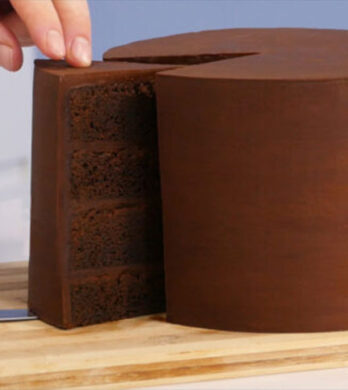
Madeira cake is often used for celebration cakes because it has a relatively firm structure that works well for layering, filling and carving.
Some Madeira cake recipes combine plain and self-raising flour to control the rise and produce a close, even crumb.
This can be useful when creating shaped or stacked cakes.
However, using plain flour doesn’t automatically make a cake suitable for carving. The complete recipe and baking method determine its strength and texture.
Cake flour is not necessarily the same as either standard UK plain flour or self-raising flour.
In American recipes, cake flour usually refers to a finely milled, relatively low-protein flour designed to produce tender cakes.
It generally doesn’t contain added raising agents unless specifically labelled as self-rising.
UK plain flour may work in some recipes calling for American cake flour, but the results can differ because of the flour’s protein content and processing.
Check the recipe carefully before substituting.
Yes, in many recipes you can make a substitute using plain flour and baking powder.
A commonly used starting point is approximately 2 level teaspoons of baking powder per 150g of plain flour, although recipes and commercial self-raising flours can vary.
If the original recipe already includes baking powder, check the total amount before adding more.
Too much raising agent can cause excessive rising followed by sinking, while too little may result in a dense sponge.
For consistent results, follow a tested conversion or use the flour specified in the recipe.
Not necessarily.
A firmer Madeira cake may retain an acceptable texture for longer than some lighter sponge recipes, but this isn’t simply because it contains plain flour.
Shelf life depends on the full recipe, moisture content, fillings, hygiene and storage conditions.
Using a mixture of plain and self-raising flour doesn’t automatically make a cake safe to keep for two weeks.
For more information about storing sponge cakes, read our CakeFlix question on how long sponge cake lasts.
For a light Victoria sponge, self-raising flour is a common choice.
For a firmer Madeira-style celebration cake, a tested recipe using plain and self-raising flour may be suitable.
For recipes that specify plain flour and baking powder, it’s usually best to follow those quantities rather than substitute self-raising flour without making the necessary adjustments.
If you’re interested in learning more about the differences between flours, King Arthur Baking’s guide to flour provides additional information about flour types and baking performance.
Learning about how to make and store ganache is just one of 39 lessons covered in the CakeFlix Diploma, which, along with 1,800+ tutorials from 100+ of the world’s top cake artists, comes as part of your CakeFlix membership from only £5.17 a month (billed annually).
CakeFlix Diploma – Certified Learning

USA recipes seem to state to use plain flour(all purpose) plus baking powder. I believe there is no difference between that and our self raising.
Madeira cake uses both plain and self raising flour whilst sponge is just self raising flour. I think the plain flour makes a denser cake that is easier to carve.
You have a good answer from Jayess, but in addition, because a plain and self raising flour mix produces a denser cake it also has a longer life. Maderia cake will last at least two weeks ( a week to decorate and a week to eat), where as a sponge cake will stale within a week.