Thinking about turning your weekend cake hobby into a real business?
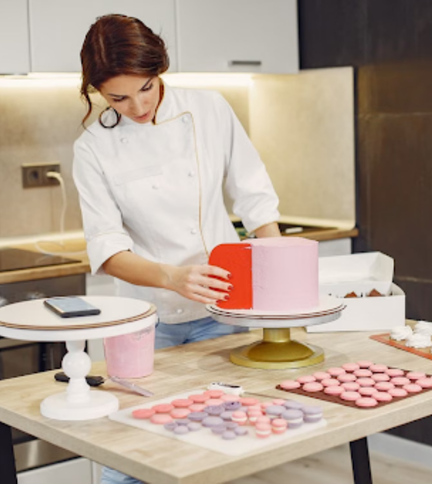 You are not alone. The specialty cake market is booming right now. Custom cake orders are one of the fastest growing segments in the entire bakery market. Business Research Insights reported custom cake orders jumped 34% during 2025 as weddings, birthdays and celebrations bounced back with a vengeance.
But here’s the thing…
Expanding a cake business takes more than just increasing your cake size. It also means investing in new equipment at a strategic rate so that you don’t…
- Burn through cash too early
- Get stuck with a home kitchen that can’t keep up
- Ruin batches because your setup is out of date
This is the precise gear progression that top tier cake makers take when scaling up.
What’s Inside This Guide:
- The Home Bakery Starter Kit
- Storage: Climate Controlled vs Regular Storage
- Mid-Level Equipment Upgrades
- The Full Commercial Kitchen Setup
- Common Equipment Mistakes To Skip
The Home Bakery Starter Kit
Every cake business starts small.
Recipes keep calling for expensive gourmet ingredients. Don’t fall for it! At this stage the goal is simple… bake tasty cakes without spending much money. Most home bakers can begin with ingredients already on hand. The only things you may need to purchase are:
- A quality stand mixer
- A few cake pans (6″, 8″ and 10″)
- A digital scale
- Piping bags and tips
- A turntable and offset spatula
That’s it. Keep costs low, focus on quality, and grow the customer base first.
Storage: Climate Controlled vs Regular Storage
Here’s where a lot of new cake bakers get tripped up…
Storage.
Butter, chocolate, fondant, cream cheese frosting and speciality items just don’t do well in hot temperatures. Having a hot pantry can ruin your products (and margin) quickly. Climate controlled vs regular storage, the age old debate.
Regular storage refers to a pantry, closet or basement with no temperature regulation. It is low cost, but fluctuates throughout the year. Chocolate blooms. Fondant sweats. Buttercream separates. Vanilla goes flat.
Climate controlled storage maintains temperature and humidity within a specific range — typically 55°F to 80°F. Translation:
- Ingredients last longer
- Cake decorations stay crisp
- Fondant flowers don’t wilt or crack
- Chocolate keeps its shine and snap
As orders begin to accumulate many bakers lease off-site refrigerated storage units for bulk ingredients, seasonal products and even decorated cakes. This step alone can save you hundreds of dollars of spoiled product each month.
Truth: Storage is killing new cake businesses. Solve this and most other problems fall into place.
Mid-Level Equipment Upgrades
When you start getting regular orders (perhaps 5-10 cakes per week), it’s time to level up.
Your limiting factor now is your oven. It only cooks 1-2 cakes at a time and takes a very long time to preheat again.
The mid-level upgrades to prioritise are:
- A double or convection oven
- A larger commercial-grade stand mixer (7-quart or higher)
- A dedicated cake fridge
- A tempered chocolate melter
- More sheet pans and cooling racks
- An airbrush kit for detailed designs
Should you buy new or used?
Buying used equipment can save you thousands. Unless you know the equipment came with a warranty, be cautious. Having a mixer break down during wedding season is not something any baker wants to deal with. New equipment can be expensive, but it is worth it.
Don’t forget storage. You’ll need shelving, sealable containers and plenty of cold storage area as your pantry begins to expand.
Tip: Time each ingredient before it gets used. If things are expiring too quickly you are buying too much or storing it improperly. Attack the cause… don’t give it more ammo.
The Full Commercial Kitchen Setup
This is the big leagues…
When demand exceeds the capacity of your home kitchen, rent a commercial kitchen. Financial Model Lab says a full cake decorating studio can cost $10,000 to $50,000 in commercial kitchen equipment.
The full commercial setup includes:
- Commercial deck or convection oven
- Walk-in refrigerator
- Walk-in freezer for finished cakes and doughs
- Fondant sheeter
- Commercial dishwasher
- Three-compartment sink
Plus tons of smallwares. Turntables, cake boards, dowels, silicone moulds, edible image printers, etc.
Tip: Don’t move up to a commercial kitchen prematurely. Lease, insurance and utilities will kill margins before you have enough orders. Only make the move when your home production is at full capacity.
Others rent commercial kitchen space by the hour until they are ready to sign a lease. Renting commercial kitchen space by the hour can be a good in-between step that many successful cake decorators take from baking at home to full commercial ownership.
Common Equipment Mistakes To Skip
Cake bakers make the same mistakes over and over again.
Here are the biggest ones to avoid:
- Buying tools you don’t need quite yet. That fancy $500 airbrush kit won’t help you if you aren’t taking steady orders already.
- Saving money on mixers. Cheap mixers will wear out quickly with daily use.
- Ignoring storage. Spoiled ingredients quietly eat your profits every single month.
- Skipping the fridge upgrade. Home fridges can’t store bulk cream, butter or finished cakes properly.
- Going commercial too soon. Overhead costs will eat you alive without steady orders.
Cake business expansion is all about strategic upgrades, not extravagant purchases. Every piece of equipment you buy should begin to pay for itself within months of buying it. Otherwise, it’s just junk taking up space on your counter.
Final Slice
Evolving from a hobby baker to running a legitimate cake business is a process.
Begin small. Scale up only when you have the orders to justify it. Scale your storage capacity up first — that’s where most new bakery owners fail. As demand increases though, spend money where it will help you produce the most product at the highest quality.
To quickly recap the progression:
- Start with basic home tools (under $1,000)
- Upgrade storage as ingredient volume grows
- Level up the oven, mixer and fridge at mid-stage
- Move to commercial equipment only when needed
- Skip the flashy tools until they pay for themselves
Having the proper equipment at the proper time is what sets up a failing side hustle vs a booming cake business with repeat customers.