Baking involves extreme heat, sharp tools, and common food allergens, making kitchen accidents highly likely. By understanding basic emergency responses, bakers can quickly manage burns, cuts, or allergic reactions. This guide covers how to handle unexpected kitchen injuries effectively and safely.
We all love the smell of fresh vanilla cake pulling out of the oven. But let’s be honest, working in a bustling kitchen isn’t always a relaxing hobby. You’re juggling searing hot pans, handling sharp serrated knives for leveling, and navigating floors dusted with slippery flour. Accidents happen in a split second. Ever tried catching a falling hot pan out of pure reflex? It hurts. If you run a cake business or just bake constantly at home, knowing how to handle a medical emergency is vital. That’s exactly why booking First aid training in downtown Toronto is one of the smartest investments a baker can make.
What are the most common kitchen injuries for bakers?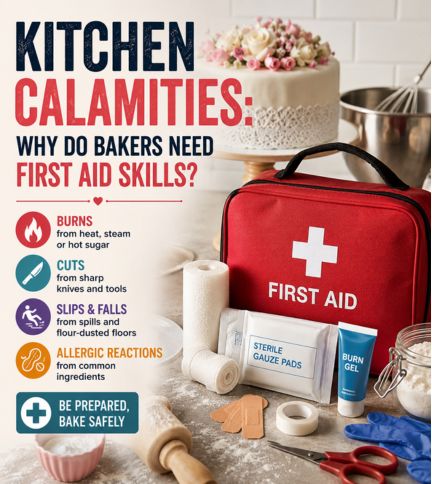
Baking might seem harmless, but the kitchen is actually full of hazards. The most frequent injuries are thermal burns from hot oven racks, boiling sugar, or steaming liquids. Sugar burns are especially nasty because the sticky syrup clings to your skin while it holds its heat.
Cuts are another major issue. Have you ever sliced your finger while chopping baking chocolate or trimming a cake tier? It is a surprisingly common mistake when we get rushed. Slips and falls also rank high, usually thanks to a puddle of spilled milk or a dusting of cornstarch on a tile floor.
How should you handle a minor baking burn?
Your first instinct might be to grab an ice pack or rub butter on a burn. Please don’t do that. Ice can actually cause further tissue damage to the burned area, and butter traps the heat inside the skin.
Instead, immediately run the burn under cool (not freezing cold) water for about 10 to 20 minutes. This draws the heat out of the tissues safely. Once the area is cooled down, cover it with a sterile, non-stick dressing. If the burn blisters badly or covers a large area, you need to seek professional medical attention right away.
Why is allergy awareness so critical in a bakery setting?
When you bake for the public or even for a large family gathering, you are handling major allergens. Nuts, dairy, eggs, and wheat are everywhere in a baker’s kitchen. Cross-contamination can happen instantly if you use the same spatula for a peanut butter filling and a standard buttercream.
If someone accidentally ingests an allergen and goes into anaphylactic shock, every second counts. You need to know the signs, like swelling of the lips, difficulty breathing, and hives. Knowing how to properly administer an epinephrine auto-injector (EpiPen) can literally save a customer’s or loved one’s life.
Where can you learn proper emergency responses?
Reading a quick blog post is a great start, but it doesn’t replace hands-on practice. Taking a recognized certification course gives you the muscle memory needed to act during a panic. Modern courses even use blended learning, meaning you can do all the boring theory reading online at your own pace. You then just pop into a classroom for a few hours to practice the physical skills on mannequins.
If you are looking for first aid training near the vibrant Annex neighborhood, along Bloor West, or other areas close to our facility, then you may reach out to Coast2Coast First Aid/CPR – Toronto in that area. For more info and articles like this visit:https://www.c2cfirstaidaquatics.com/
Frequently Asked Questions
What is the best way to treat a deep cut from a kitchen knife? Apply direct pressure to the wound using a clean cloth or sterile gauze to stop the bleeding. Elevate the injured hand above your heart if possible, and seek medical attention if the bleeding doesn’t stop after 10 minutes.
Should I pop a burn blister caused by hot sugar? No, you should never pop a burn blister. The blister acts as a natural barrier protecting the raw skin underneath from infection.
What items should every baker have in their kitchen first aid kit? Your kitchen kit should include blue detectable bandages (so they can be seen if they fall in batter), burn gel, sterile gauze, medical tape, and a cold compress.
Can I learn CPR and first aid online? You can complete the theoretical portion of your training online. However, to get properly certified by the Red Cross, you must complete an in-person skills session to practice CPR and bandaging.
How do I respond if a customer starts choking on a baked good? If they are coughing forcefully, encourage them to keep coughing. If they cannot breathe, speak, or cough, you must begin a cycle of 5 back blows followed by 5 abdominal thrusts (the Heimlich maneuver).